
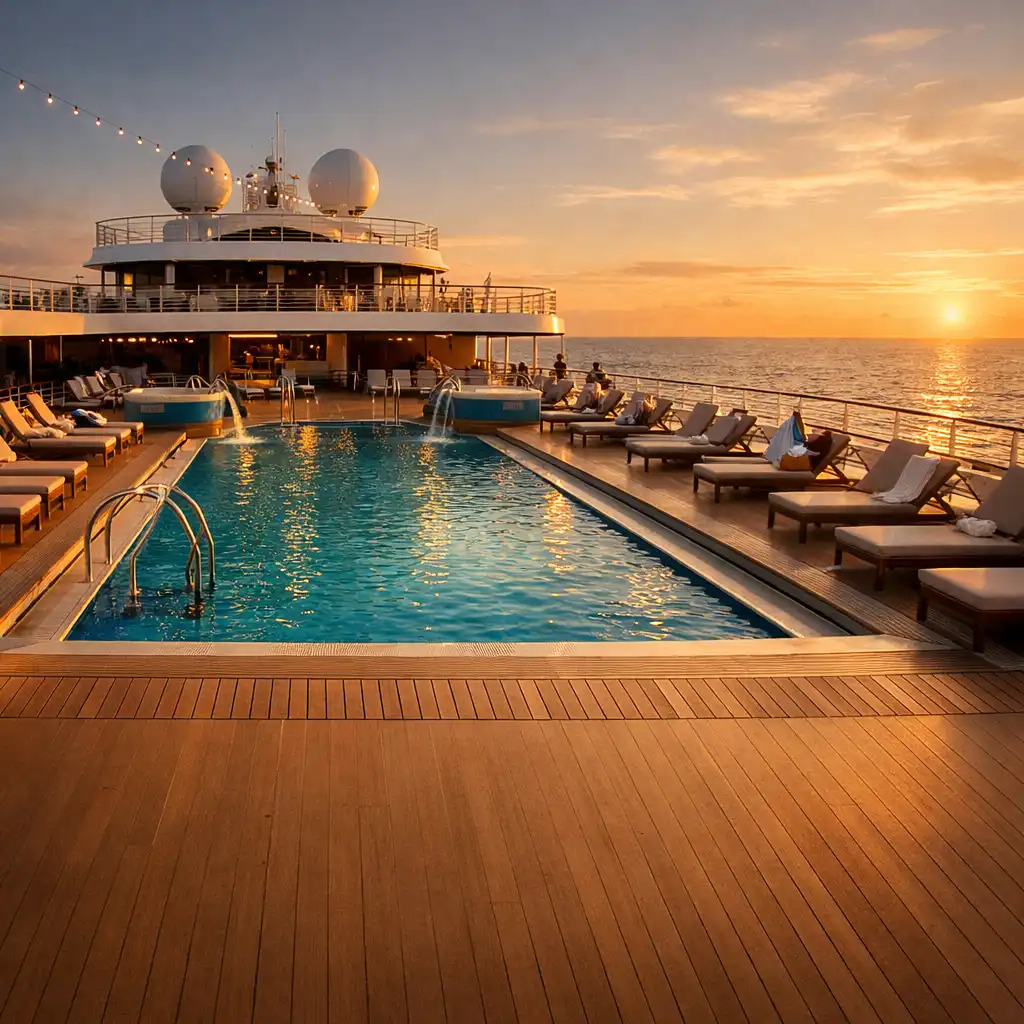
A cruise ship pool deck at golden hour with loungers and ocean horizon

Onboard Infrastructure

The Backbone of Your Cruise Experience

Onboard infrastructure includes the pools, spas, elevators, laundry, medical facilities, and other systems that keep a cruise ship running smoothly. These facilities often determine how comfortable and convenient your voyage will be.

Infrastructure is distinct from entertainment and dining, focusing on functional and wellness facilities. Modern cruise ships invest heavily in pools and spas as key selling points, and understanding infrastructure helps travelers choose the right ship and cabin location.

Why Infrastructure Matters

Comfort, convenience, and peace of mind start with the systems you rarely notice until they fail.

Well-designed infrastructure means shorter elevator waits, well-maintained pools, and accessible facilities. It also includes behind-the-scenes systems like water treatment and medical care that ensure safety and hygiene. Infrastructure directly impacts daily routines: getting around the ship, relaxing, and staying healthy. Modern ships use advanced technology for climate control, waste management, and safety, while travelers with mobility needs or families with children benefit from thoughtful infrastructure design.

Pools: Types and Reviews

Most ships offer more than one pool experience. Knowing the difference helps you find the right spot for your travel style.

Main Resort-Style Pools

These are the largest pools, often located on the lido deck. They are designed for socializing and family fun, with shallow areas for children and nearby bars and music. However, they can get crowded on sea days.

  • Typically 20-30 metres long, with depths of 1.2-1.8 metres.
  • Surrounded by loungers, hot tubs, and poolside service.
  • Best for families and those who enjoy a lively atmosphere.

Adult-Only Serenity Pools

Many ships offer quiet, adult-only pool areas with comfortable loungers, cabanas, and a more relaxed atmosphere. These are ideal for couples and solo travelers seeking peace.

  • Often located aft or in a separate solarium.
  • May have retractable roofs for all-weather use.
  • Typically include a nearby bar and light snack options.

Splash Pads and Kids' Pools

Family-friendly ships feature dedicated splash areas with shallow water, water slides, and interactive play structures. These are safe and entertaining for young children.

  • Depth usually under 0.5 metres.
  • Often themed with colourful designs and water features.
  • Located near family cabins and kids' clubs.

Spas and Thermal Suites

A ship spa can be a quiet retreat or a serious wellness investment. Here is what to expect before you book.

Thermal Suites and Hydrotherapy

Thermal suites typically include heated loungers, saunas, steam rooms, and hydrotherapy pools. Access is often included with spa treatments or available via a daily pass. Hydrotherapy pools use jets and warm water for relaxation. Saunas and steam rooms vary by ship; some are co-ed, others single-sex.

Treatment Rooms and Services

Spa treatment menus include massages, facials, body wraps, and acupuncture. Prices are higher than land-based spas, but the ocean view and ambiance are unique. Massages range from $120-250 USD for 50-80 minutes. Book early for sea days; appointments fill quickly. Look for port-day specials and embarkation-day discounts.

Elevators and Ship Navigation

Getting around without the wait is a skill you can learn quickly.

Modern ships have multiple elevator banks, but wait times can still be long during peak periods like after shows or meal times. Understanding the ship's layout and using stairs when possible can save time. Ships over 100,000 gross tons typically have 12-20 elevators. Midship elevators are busiest; aft and forward banks are quieter. Some ships have smart elevator systems that reduce wait times.

Navigation Tips

  • Use the aft or forward elevator banks to avoid midship crowds.
  • Take the stairs for one or two decks, especially after dinner or a show.
  • Check the ship's app for live elevator status or deck-plan shortcuts.

Laundry and Practical Facilities

Packing light is easier when you know what laundry options are on board.

Self-Service Laundry

Many ships offer self-service laundry rooms with washers, dryers, and ironing boards. They are usually free or low-cost, but can be busy on sea days. Typical cost is $2-3 per wash or dry cycle. Detergent is sometimes provided or available for purchase. Some luxury lines include laundry service in the fare.

Dry Cleaning and Pressing

Full-service laundry and dry cleaning are available on most ships for a fee. Express service is often available for formal nights. Prices vary but are comparable to hotel laundry services. Some suites include complimentary pressing. Turnaround is usually 24-48 hours.

Medical Facilities and Safety

Medical care at sea is more capable than many travelers expect, but it is not a hospital.

Cruise ships have medical centres staffed by doctors and nurses, equipped to handle common illnesses and minor injuries. They are not full hospitals, but can stabilise serious conditions until evacuation. Medical centres are usually open daily with limited hours; emergency care is 24/7. Consultations and treatments are charged to your onboard account. Travel insurance with medical coverage is strongly recommended.

Safety Checklist

  • Carry a small supply of essential medications in your hand luggage.
  • Know the location of the medical centre on your deck plan.
  • Confirm your travel insurance includes medical evacuation cover.

Accessibility Infrastructure

Designed for all travelers, but with important differences between ships.

Modern cruise ships are built with accessibility in mind, including wheelchair-accessible cabins, ramps, and elevators with audible signals. However, some older ships may have limitations. Accessible cabins are wider with roll-in showers and grab bars. Public areas are generally step-free, but some outdoor decks may have thresholds. Crew members are trained to assist passengers with disabilities.

  • Wheelchair-accessible cabins with wider doorways and roll-in showers.
  • Step-free routes through most public areas and dining rooms.
  • Elevators with audible floor announcements and tactile buttons.
  • Crew assistance available for boarding, tendering, and emergencies.

Ship Class Comparisons

Small vs. large: what to expect from infrastructure across the fleet.

Ship size significantly affects infrastructure. Mega ships offer more pools, spas, and dining venues, but can feel crowded. Smaller ships provide a more intimate experience with fewer amenities.

Comparison of infrastructure by ship class
Ship Class Pools & Spas Elevators & Flow Overall Feel
Mega ships (over 150,000 GT) Multiple pools, large spas, many hot tubs 12-20+ elevators, but high passenger density Lively, amenity-rich, can feel crowded
Mid-size ships (80,000-150,000 GT) Balanced pool and spa offering Good elevator coverage, moderate waits Comfortable balance of space and choice
Small ships (under 80,000 GT) Limited pools, basic spas Fewer elevators, but easy navigation Intimate, uncrowded, fewer queues

Practical Tips for Using Onboard Facilities

Make the most of your time with a little planning.

  1. Pool loungers fill up by 9am on sea days; claim yours early or use the adults-only area.
  2. Spa discounts are often offered on embarkation day and port days.
  3. Use stairs for short distances to avoid elevator crowds.
  4. Check the daily program for facility hours and special events.